
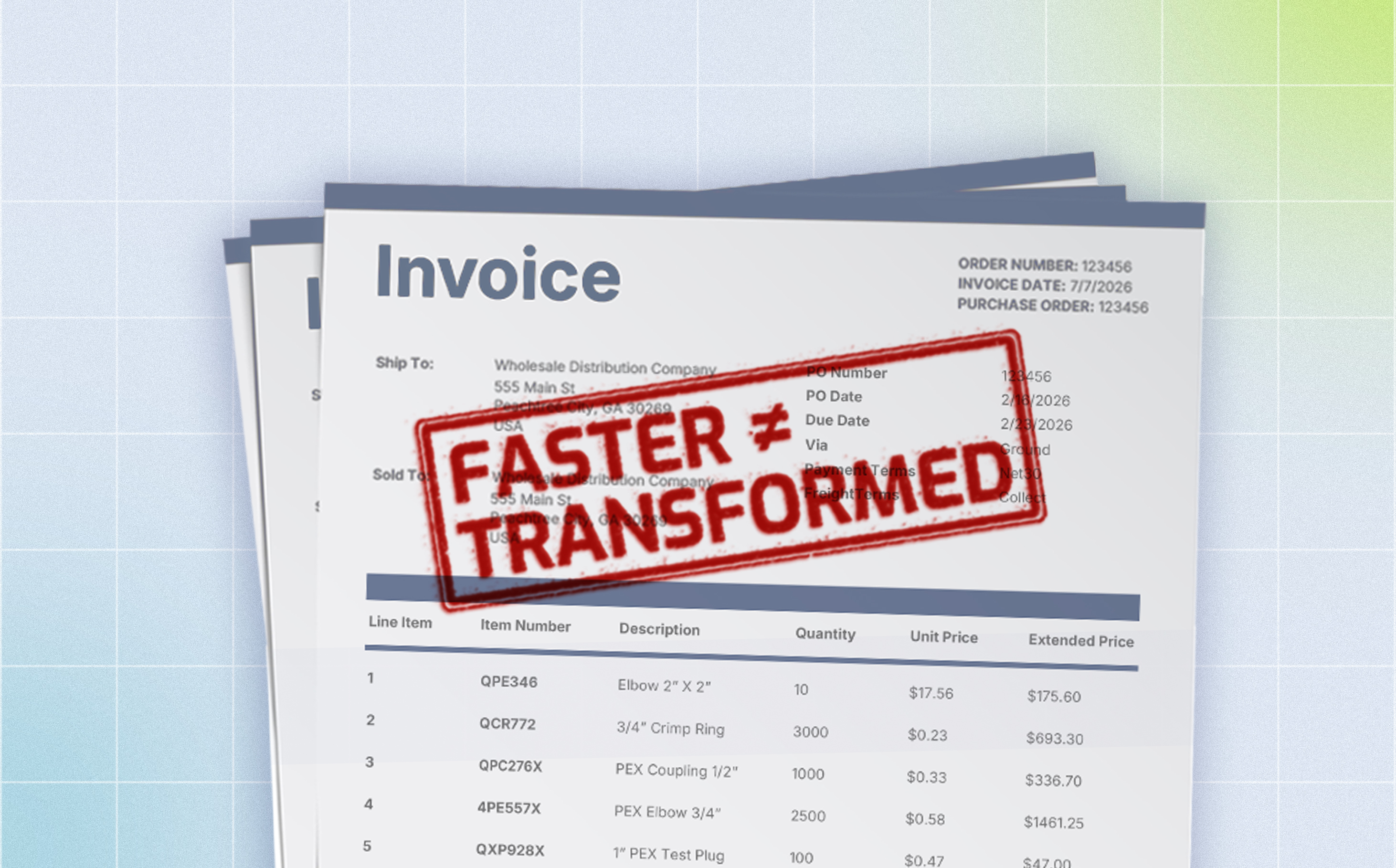
Every few weeks another AI company announces document automation as if it’s a brand new idea. We can automate your quotes. Your reps will never enter another order. It’s presented as a breakthrough, and the demos are slick. Watch how fast it reads the PDF. Watch how your team gets their time back.
I’ve been around this long enough to know it’s not new.
Back in 2008 and 2009 I was automating receipts for expense reporting at a company I worked with. At the time it was genuinely game changing for that industry. Turning paper data into digital data has been happening for many years. At Kodaris we’ve been automating quotes and orders for some of the largest companies in distribution for eight or nine years.
So the technology itself isn’t a sudden leap. What changed is the cost and the accessibility. AI has brought the price down and made automation easier to adopt, which opens it up to a much wider audience. That’s why there are so many SaaS companies and new AI startups focused on it right now. The capability got cheaper and easier, not fundamentally different.
Here’s where I think the pitch goes sideways. The demo shows how fast the automation is, and then tells you your sales reps can stop entering orders and focus on other things. It sounds good. But it quietly removes the focus from the actual problem.
If your sales reps are spending all their time entering quotes and orders, they’re not selling. Making that data entry faster gives you a little time back, but it doesn’t fix why the work exists in the first place.
And there’s a deeper issue underneath it. Reps usually aren’t the experts on margins, on what you’re buying at, or on what you can sell at. That’s not a knock on them, it’s just not their job. It’s why a lot of the larger players in distribution centralize quoting into a small group of people who do know the pricing, know the margins, and know how to get the most out of a deal to win the customer. That structure exists for a reason. When a quote runs through that team, the numbers get reviewed by someone who can make sure you’re quoting to win the work, whether that’s off the average or off the specifics of a particular job. Point the automation there and you make experts faster. Scatter it across every rep and you’ve just handed pricing decisions to the people least equipped to make them, only quicker.
We automate a lot of that work for those quote departments, and we can automate it for individual reps too. But automating an inefficient process just gives you a faster inefficient process. Just because AI can reinforce a workflow doesn’t mean that workflow is where the business should be going. Saving time is great. It’s just not the same thing as moving the ball forward.
At Kodaris we’ve spent years focused on the customer, the customer journey, and the interactions along the way. When you look at quoting through that lens, the picture changes. Most customers would rather self-serve. They want to pull their own quote and buyout numbers out of the box so they can get their own customers a quote and win the work, then come back to the distributor later to negotiate the final numbers, knowing the distributor and the salespeople have their back and are helping them win more work.
What we hear from our customer base is that distributors and manufacturers expect their vendors to help them succeed. We’re selling your products, and distribution is largely a commodity market, so the rep’s job isn’t just to push more product or close more sales. It’s to help the customer be successful, bring product knowledge, and build the relationship.
That’s why document automation, while important, isn’t the true digital transformation AI can deliver. Real transformation comes from better processes. It comes from the quoting team working faster with better insight into margins. It comes from letting reps sell more, and from letting customers self-serve entirely because the AI is genuinely that good. We have many customers doing exactly that through our customer portals and commerce tools, getting quotes and working through the whole flow digitally, on their own. That’s where the true ROI shows up, because the business is no longer the blocker.
Think about the alternative. A customer sends a quote to a rep, the rep uploads it to an AI, the AI checks the pricing, and the rep sends it back. Even with AI in the middle, that’s still an antiquated process. You’ve automated a step without changing the shape of the work.
We have a lot of AI projects underway that keep rounding out the platform, and we touch the customer journey end to end, from vendor to delivery, all in one place. But none of that is really about automating documents. It’s about the processes, and the future of those processes, that let distributors actually compete.
So the question isn’t whether you can automate your paperwork. You can, and it’ll save you some time. The real question is whether you’re using AI to rethink the process or just to speed up the one you already had. Over the next 3 to 5 years, I think that difference is going to separate the distributors who transform from the ones who just digitized their old habits.