
Kodaris
Kodaris
Listen & Follow Now:
SHOW NOTES:
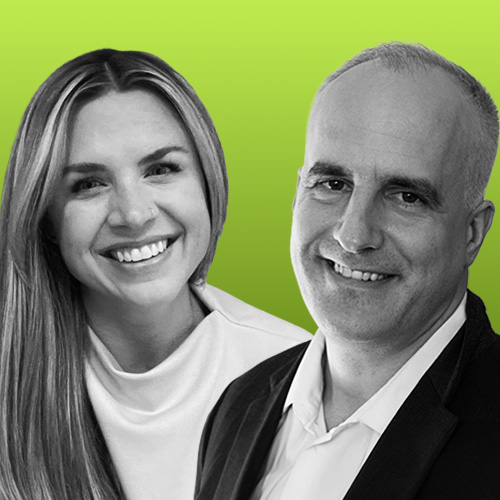
In this episode, Margaret Kelsey and Tony Zakula tackle a deceptively simple question: Are your operations driving your customer experience? Or is customer experience driving your operations?
From hidden data silos to overly rigid software, they dig into why many companies accidentally design their customer journey around internal processes. You’ll hear how you can use customer expectations to shape better processes and smarter tech.
Tony explains why AI and digital tools aren’t the bottleneck anymore (humans are), how too much SaaS is giving everyone subscription fatigue (and data chaos), and why the most dangerous phrase in B2B is: “That’s just how we’ve always done it."
TRANSCRIPT
Margaret Kelsey (00:42)
Tony, we're back after a little hiatus, back to the podcasting. How does it feel?
Tony Zakula (00:49)
Feels amazing, I've been looking forward to it.
Margaret Kelsey (00:52)
Well, one of the things that we were busy with before doing this recording is we had an ARIS meetup. So that's our customer innovation community. And one of the topics that came out of there I thought was really interesting. And we chatted about it being a podcast episode. So do you want me to unveil it or do you want to set up the premise?
Tony Zakula (00:51)
No, go ahead and bail it.
Margaret Kelsey (01:12)
So there was this really interesting discussion at this event about whether or not your operations is accidentally driving your customer experience, or if you're being thoughtful enough about your customer experience to have it drive operational and process decisions. So talk to me, Tony, a little bit about what you see in distribution right now. Where do most distributors operate from?
Tony Zakula (01:39)
That's a great question. And I think just adding the context, we talked probably, four hours, about digital transformation in the future and the path to that, especially with the world of AI changing so many things we're working in and kind of really changing the whole technology landscape over the next 10 years and the business landscape to be frank.
So as we think about where we're going and what's happening in the industry, the other thing–we've known for a while–but it's always been about user experience, customer experience and technology. It's about user experience. Amazon has perfected customer experience. There’s been this huge race in how we buy as consumers, to create a better and better experience. We've always talked about how B2B is behind consumer, right? The experience just is not the same. But people expect it. And I think people have been trying to catch up, if you will.
I think as we've been doing that now and AI is accelerating it and the tooling though, the technology is becoming much better where B2B can support that because frankly the technology wasn't there when the consumer was there. There's so many other requirements with business to business transactions. But the technology is definitely there now.
And now it becomes, well if the technology is there–you know, the technology taking an order, providing data–it’s only one component because data, process, all of those things have to drive that experience. And so does your operations actually, is that centered on that customer experience?
I was talking to a group of folks probably three, four years ago. And we were dissecting some of their challenges and I said, you know what your biggest challenge is? And they said, what? I said, you're not an e-commerce company. You're retail distribution company. You want to become an e-commerce company, but e-commerce companies like Amazon, they expect constant updates. There's constant data flowing. There's constant…the operations itself is driving the customer experience.
Where many times in distribution or manufacturing, we think about the products. It's all about the products. The operations is fully disconnected from the customer. And then we're trying to bolt on commerce and customer experience. And I've heard many, many times, well, the customer needs to do this because this is how we do it. Instead of how does a customer want the experience to work, and we'll work backwards from there.
So across the industry, and I think that's the largest challenge folks face today is not, do we have the money to invest in technology? Because that's getting inexpensive. Do we have the know-how to present or provide product data? Sure. Do we know how to drive customer experience?
And I think that comes down to, well, you know, marketing agencies, all kinds of folks will tell you, well, it's all about the website, the experience on the website, but it's really not. Everybody knows Amazon doesn't have the best design or the most high-end shopping experience, but it gets the job done really well. And it's the after the purchase experience that we all use Amazon for. It's not the pre-purchase experience. And I think that's the biggest challenge is the after purchase experience, the delivery, the fulfillment, all this data that we expect as consumers now.
And as near real time as possible is one of the largest challenges and too many times folks think, well, we're going to get a better website or we're going to add some more stuff to the website and that will get people to buy. Where literally they probably buy from you for your service and the relationship they've had with you for 20 years. But by picking up the phone.
Now they want that digital experience and they still want the same level of service, the same level of everything. But they don't want to talk to you, the younger generation doesn't want to talk to you. So I think that provides a good definition of, you know, are you expecting your customers to do things a certain way because that's how you do them internally? And that's just the wrong way to look at it. Is operations driving that customer experience or is customer experience driving your operations?
Margaret Kelsey (05:58)
I think that's important nuance too. I think sometimes people think, oh, okay, we're going to, you know, invest in technology. So now all of a sudden we're just going to think about the user experience of the technology. Not thinking that that person, that maybe one piece of their experience is now to order, or to pay, or to do one of those things digitally, but actually thinking about the totality of their experience as they walk through the world and as they get their product delivered or pick it up at a warehouse or get notifications about order statuses and things like that. The idea that you can't just say, okay, I’m gonna opt into the digital transformation and have blinders on to just think about the digital experience.
Tony Zakula (06:46)
Yeah, I think a nice example would be, maybe I'm a loyal purchaser from you and let's say I’m willing to buy everything from you that I can. But if you are out of something, I need that for my business because–not just consumers wanting it–I need it to run my business.
So if I'm online buying and, let's say you have 10 in stock. Everybody was, typically at the beginning, afraid to show inventory or say whether something's in stock or not because they want the phone call, they want to find it for them. So, I've talked with folks about, how do you replicate the same thing? Because as a buyer, I want to know whether you have it or not. Not because I'm just going to take the sale away from you, which is what everybody fears. But if you don't have it, it allows me to take action and find it if I need it faster.
So if we present and say, well, we have 10 in stock and we have four coming in tomorrow and we can get more within the lead time of one week, well, if I don't need it for two weeks, I might say, yeah, I like them. I'm just going to buy from them. But if I need it today and I place an order and then you call me and say, I'm out and I lost an hour, it's not a great user experience, right?
But, that pre-buy without the phone call, that takes a lot of data work, a lot of process work that's receiving, that's tracking lead times. There's a whole lot involved with just answering those simple questions. But as the consumer, they want that. Why? Because they can make decisions faster. They have the information at their fingertips.
And so actually a great digital experience. How many times do we go on Amazon and say, oh it's out so I'll buy this other brand, or that's no longer available, let me look for something different. It's all these different things that we expect that sometimes we, customers or distributors or manufacturers, think we can control this by getting them on the phone and we can not lose the sale. But at some point you're going to lose a sale because the expectation is: I should be able to know this and as soon as your competition offers it, I'm going to go there first.
Margaret Kelsey (08:58)
Yeah, I think competition is changing. I was thinking about this before, too, it's not just about losing a customer to someone who has maybe a different product line that the customer likes, or a better service experience.
But truly now, if a competitor adopts good technology before you do, that could be–and I think we talked about it in a previous podcast episode–that it can be silent, right? Like they're not going to call you and officially break up with you. They're just going to be gone without any sort of exit interview of the reasons why. And that's happening quicker and quicker as technology, to your point, gets cheaper and easier to adopt.
Tony Zakula (09:45)
Yeah, I think I made a statement when we were in the meeting that everyone is now in a technology race. I remember I spoke at a conference maybe five years ago and was talking about the future–and I'm not right very often about the future–but I did say…
Margaret Kelsey (10:03)
A couple times, a couple times you've been right.
Tony Zakula (10:09)
Every distributor is going to need to become a tech company. Several people in the audience snickered and said that that's never going to happen. And it wasn't because I was so smart. It's because when you think about Amazon, they're a distribution company. They distribute stuff and they distribute at scale. They have supply chains.
And you think about that today, it is happening. The feature sets and we have, there's large distributors in many industries who are buying tech companies, investing in tech companies, have their own VC funds or incubators. Why? Because Silicon Valley and tech companies have driven customer experience. That's how they make their money, by changing buying habits. And that's going to federate opportunity everywhere, right? In distribution, manufacturing, consumer.
As human beings, we like that experience. And we will switch for a better experience. If the price is nearly the same, we will switch.
Margaret Kelsey (10:59)
Even if it's a little more. If it saves me time, I'm willing to pay a premium on time saved. I know businesses might be a little bit different and a little bit more rigid in terms of…
Tony Zakula (11:01)
Well, but, B2B, everybody's time and time is money is much more than even the consumer world, right? but yes, you, you might pay more. We had, you know, someone give an example of stocking inventory and vehicles and the distributor managing inventory. And once they went on the competitor’s system, they basically lost all sales and can't get it back until they offer something similar.
And that's purely just changing people's buying habits through technology and convenience. But then that translates to sales. As people contemplate technology, it's not about buying technology. It's about understanding your customer, their use case, how you can change the game in your favor versus your competition's favor.
And a lot of people struggle with the investment it takes. There was a smart CEO of a company saying, like, we're going to invest in this and we're going to invest with Kodaris to build what we need because we're either going to pay now we're going to pay later in lost sales.
And that's so totally accurate that, if you do nothing, if you aren't constantly iterating now with your competition, with the market, with what your users need, you're going to eventually just become obsolete. Not because you can't provide product, but because everybody just prefers to buy a different way.
And that's the pathway and the big distributors know that, the tech companies know that, and that is the future. And so, shameless plug for Kodaris, that's why we have a community, distributors contributing to build that technology kind of association mindset to be able to compete and continue to innovate long into the future.
Margaret Kelsey (12:57)
Good plug, well placed. That also made me realize that I probably run my life like a business, because I was like, “oh, well, maybe businesses would have a harder time validating that time is money.” No, actually, that's where I got that from, that my time is money. And so I'm going to pay a premium if it means I'm going to get it faster, spend less time buying.
Also in that meeting, I remember you asking the attendees a question that kind of had their brains spinning a little bit, and it was around employees and customer experience. Do you want to talk about what that question was and why that mindset is so important?
Tony Zakula (13:36)
Yeah, I think it was–correct me if I'm wrong–but I think it was: “Who in your business does not touch the customer?” When you stop and think about what we're talking about–customer experience driving operations–going back to our inventory example, that guy who's out there receiving, if he says, “Well, I'm kind of busy this morning stocking these shelves, so I'm going to go receive in five hours.” And now there's less inventory displaying on the website for the person making the buying decision. Are they costing themselves sales? Right? Because the system needs that data surface all the way to the customer.
So if you went through all the departments in your operation and think through all of that, you know, who–and I think the only department that we came up with is maybe accounting? Or finance, right?
Margaret Kelsey (14:27)
But still, how fast folks get their, I don't know, financial...
Tony Zakula (14:33)
Well, if you slice off AR or whatever internally, if we're doing accounting for our company, profit loss, all of those things, right? And small companies, obviously that person plays multiple roles, the larger you get. But regardless, let's say 90 or 95% of your company somehow in some way has a chain effect on the customer.
That really goes back to the heart of serving the customer and the customer experience has to be a company-wide initiative, company-wide mindset, be at the top of everybody's mind. And certainly we know the success of companies who drive customer experience and efficiency, because we know there's only two constants, right?
Everybody wants everything less expensive and everybody wants everything faster. Whether it's a consumer shopping on Amazon, Walmart, to businesses. So those two variables–and I think Jeff Bezos said it–are constants you can live by, and driving that experience takes a team. Not just one person, not just your commerce technology, despite what the marketing tells you or the salespeople tell you.
It's not about just the technology, you know, it’s about that business process and data and real-time information for your customer.
Margaret Kelsey (15:48)
I'm smiling because you never let an opportunity go by to sneer at marketing.
Tony Zakula (15:57)
Yeah, they never shade the truth.
Margaret Kelsey (16:06)
I think the other one that came up outside of–there was one other one besides finance and that was recruiting. But I would also like to make a case that recruiting does touch the customer because the people that you recruit into your organization then are touching the customer. So recruiting essentially, you know, kind of makes a big difference on customer experience too.
Tony Zakula (16:22)
Well, we talked about it and will probably cover it in a future podcast, but we talked about the keys to driving digital innovation: people, process and data. And people's number one. So absolutely, recruiting doesn't directly touch the customer, but hiring the right culture, the right mindset, all of those things, it does matter.
Margaret Kelsey (16:42)
And then the second question that you had asked all of the attendees to think about about the breadth of technology currently in their businesses. So I'll let you prompt that question. And then also we can talk through some of the themes that came out of it.
Tony Zakula (17:00)
Yeah, I think the question was: “How many pieces of technology does it take to run your business?”
Margaret Kelsey (17:09)
Also pieces of different technology. Different applications, different software products.
Tony Zakula (17:15)
Different applications, right? And that was based on the idea that the tech landscape is changing, and we see this where every software product you use, there's a learning curve for your employees. There's a cost of integration, implementation, maintenance, upgrade costs, SaaS costs.
So if you sat down and thought through all of that, you know, is it five, is it 10, is it 30, and what's the cost of overhead and all of those? And then they're constantly upgrading their software, right? And now you start to layer on not only that software to run your company, but now you have all these different AI vendors who say, “Now we're going to sit on top of that and we can give you this.” And now you're going to maybe do, what, 15 more to get supposed AI capabilities?
It gets extremely expensive. And the other thing is you're sending your data around. Every AI provider says we need all of your data to make better AI decisions, right? So it's becoming untenable, which is why we see big companies like ServiceNow and other big platforms’ earnings are accelerating. And they're saying they're accelerating because people are consolidating onto their platform.
We've seen this trend in a micro scale with Kodaris. Folks getting on and eliminating six, seven, eight applications and continuing to use Kodaris more and more. And so we've seen that trend in our own little micro vertical. But you definitely also see in the big tech companies because it's, you just can't maintain it anymore. It's too big. And you can't be agile, move fast and have a connected digital experience.
There's a very large company–I won't mention by name–but they're one of the biggest retailers in the US, and they said their initiatives are to have one customer success platform and one ERP. And I think that just goes to show that even the large companies know that in order to drive digital innovation, you can't have separate systems…or they have to be very interconnected systems.
I'm sure Amazon uses probably 20 of their own products to drive, but they're all connected. They're all on the same infrastructure, they're all tightly coupled.
So if you sit down and you start listing that out, it's interesting to think, this whole, “We let employees buy software,” the whole SaaS revolution of product-led, get some champions. While it's been good for tech companies or it's been good for innovation, it's taken a toll on the business. And a lot of people are, a lot of CIOs are hesitant to pull back and then lock down and say employees can't buy things. That's where we were 20 years ago.
But I think it's going to go back there because it has to, because you can’t have every employee using something different. You just can’t have standardized process and data if you're doing that.
Margaret Kelsey (20:11)
Yeah, that's my bad, my background in product-led. I'm like, “We really made a mess over here, didn't we?”
Tony Zakula (20:19)
Everything goes in cycles in the tech industry. There's nothing new. It's just recycled and packaged in a different way.
Margaret Kelsey (20:26)
I think it's just, yeah, anything good that goes too far then just becomes chaotic. And then we got to wheel ourselves back, back again.
But I think that the data piece is really interesting. Not only data privacy, but also when we think about AI, and we think about the fact that in order to work appropriately, or well, or be better than non-AI solutions, it has to be fed with good data.
And how can you have good dataI if you have like these…I think about these nuts and bolts. Like, you know, onto all of your software systems, these little point solutions that are collecting data, but then also creating data, and then where is it feeding to? And, I mean, the amount of times that I've looked at a HubSpot instance where it's been connected to 10 other things. And I'm just like, this data is…I can't rely on it. I can't believe it, you know.
The amount of times I've looked at a CRM and not been able to believe the data inside of it is too many times.
Tony Zakula (21:26)
Yeah, I think that the SaaS market became highly fragmented and is still fairly highly fragmented with startups and investment. I think that has to correct. At least..for small business, it's fine. They don't need as many pieces.
For a large company that’s going to drive a lot and have a large footprint, 35, 40, 50 applications becomes, just untenable. I think another thing we talked about, that we're going to do a podcast on later: the true cost of a payment transaction, the true cost of a software product. It's easy for us to look at the price tag and say, “I can save a little bit here by using a different product.” But do we really sit down and formulate?
And maybe it's a good worksheet to say: “What's the cost of implementation? What's my maintenance cost? How much is it going to cost me to train my people? How much is it going to cost every time the software changes or upgrades, for me to retrain my people or my people to take the time to learn, stay up on that? And then on top of it, what if that product falls behind? And then we want to switch. What's my true switching costs at the end if I want to get off of them?”
And these are all just numbers in normal business, but too many times if we're not stopping along the way to think through that, a lot of those costs go through unnoticed. And pretty soon you're looking at your operations and you're like, “Why are we struggling so hard to make something like this happen or to get data on our website?”
And the whole thing about the cloud breaking down data silos vs. installed products was true. It did break some down, but a lot just went to the cloud and kept a silo. And I think that's where the platforms are starting to come into play as we go through this.
Margaret Kelsey (23:19)
I was thinking of another one. If I decide to leave this software product, what is the cost of migrating my data? Not only dollar amounts, but also ease of, you think of how many like website migrations or ERP migrations, and what does it cost to adopt this if, in the future, I want to get out of it?
Tony Zakula (23:45)
Yeah, the ERP is a classic. It’s way less expensive to stay on versus migrate, right? Normally, businesses rarely switch ERPs, maybe once every 20 years. But even then, if you think about the bolted add-ons for all of those different things, and then you have to move all of those, it gets deeper and deeper.
But even switching CRMs, how easy is it to get your data out, move it to another CRM, retrain your staff, do all those things. And it's normal. It's not, you know, if you're barely using it, if you're paying a high end CRM, one of the big guys, you know, $150,000 a year, and then you can get the same functionality because you don't use all of it for 30 grand a year and you're going to invest 30 grand in, you know, migration, and then you're going to get payback in two years.
It's all normal business things. But, I think, too many times in a buying decision, people don't stop and count the costs. Especially, let's say you've never used a CRM, so this one looks like it has more features. But are you going to use those features? Do you need all that functionality to match the price tag? What's your ROI? What's the ROI case? And they'll provide you all those ROI cases, but whether they're reality or not, or will turn into reality for you is what you have to consider as a buyer.
Margaret Kelsey (25:03)
Yeah. Or if it's even applicable to your business. I think the other thing that we haven't touched on yet in terms of having so many different applications running your business is also that a lot of, whether it's a partner–doesn't even have to be software–but any external force to your business can force you into making operational or process decisions that might be not advantageous to the customer experience or might not add to the customer experience.
So talk to me a little bit about what you've seen in software over the last however many years in terms of software companies saying, “Well, that's just, that's how you're going to have to do it because that's how you do it in our system.”
Tony Zakula (25:48)
Yeah, I think that's a kind of multi-decade thing. Software started, it was created one way and you had installs and then you had options and that software installed on-prem. Except on-prem was on servers or other places, but truly wasn't fully distributed everywhere. You could only access it in certain cases.
Then we went to the cloud and that promised real-time availability anywhere you're at on the globe where you have internet access. And that did help. But with application, it's become extremely hard, right? So now we came out with platforms, APIs, all these different things to interconnect.
And as we think through that, I think that a challenge of SaaS companies is: “I'm still making a product, but I need it to be cookie cutter per customer because that's the only way I scale my investors' exit.” The super mass. And that's where we kind of started Kodaris with the vision that you could customize per customer.
So back in 2014, before composable was a world, we were working on the composable mindset. Because I can guarantee you that any massive distributors who are building and coding their own thing, their own experience–or massive companies like Amazon or anybody else–they’re not restricted by what the software does, they're going to build to drive that consumer experience.
If you're not as big as them, then many times you're restricted by what the software does and that's what you have to do unless you're going to invest in customizations. And hopefully the software you chose allows for that.
So it's come a long way, but I think it's still an expense. Now not only are you paying to customize what you need if your platform or software supports it, you want to be sure that now you're even deeper in on that software because now if you have to add that to your switching costs, if you have to switch, how do you get that same functionality?
That can become a detriment if you have a highly modded system and it gets dropped by a software company or bought in deep six, now it's not a problem too, right? Because unless the software is engineered to allow upgrades without you having to change your mods, now you're stuck in old versions, which is another problem that a lot of people fell into when they could change or mod their software. They can't get upgrades and they can't go because it's not going to be supported.
Unless the applications are engineered to actually allow you to do that like we've done with Kodaris. So it's also an engineering challenge. It's hard to know, too, but something to ask questions and investigate. And of course the cloud offers constant upgrades, but not always that seamless in the cloud even.
Margaret Kelsey (28:40)
Yeah. I think, too, that bringing it full circle, it’s also a mindset shift for employees. That, just because they did something a certain way before, because the software or partner demanded that it be done in that rigid fashion. I think there's a piece of this, of even illuminating your employees to question whether or not that was the right customer experience. Or, maybe it was 10 years ago, but now as customers are desiring change, demanding change, is that the right business process?
And so I think there's this, almost like a “cart going down a muddy path” mentality of business process where you have to get folks internally to even think, “Wait a second, let me just think from like first principles of how this customer might want this and figure out how to get technology in that route.” Rather than going down the old stodgy enterprise software cart path.
Tony Zakula (29:43)
Well, I think it's two things. As human beings, we like process unknowns, right? So we even might be doing the same thing we did 10 years ago, because that's how we do it. We maybe even don't know why we do it, but that's how we were trained. That's how we do it. So I think in a digital innovation world, we need to constantly be evaluating, is there a better way to do this? Are there areas for improvement? Are we able to do it faster? Are we able to eliminate work?
Especially with the ability to automate so much today. Do we have a consultant or a partner who we can ask “Here's our process, is there a way to automate part of this?” Those are all valid questions we should be asking. I think on the software side, it was very rigid. I think now things are changing so fast that you can almost become too flexible. Because process does drive good business practice, good data, but just because you did it one way today, in six months there may be already a better way from a technical perspective or software perspective, or you just learn something new.
And I think anybody that thinks, “We develop our processes and that's what it's going to be for the next five years.” The landscape's changing way too fast right now. There's way too many tools.
The downside is if you try to change too fast, and we talked about this with AI, if you try to change too fast and adopt too fast…because it is changing so fast, those tools might be obsolete in three months, and continuous change gets too expensive as well. So there's a balance of making sure something's going to be there for a while.
Maybe in a year and a half or two years, you're gonna change again and you're gonna try to make that change as least expensive as possible. But you don't wanna change every three months either if you're going to install a new piece of software, do training or those things because, I'll tell you that the engineering tools, AI tools on the engineering side are getting deprecated every two months right now and changing as technology figures this out and you get faster. So there is a very deliberate balance there on how you want to approach things.
Margaret Kelsey (31:54)
Awesome. Well, this has been fantastic. And it's exciting for the listeners to get a 30-minute version of what was a four-hour conversation at the ARIS event. So our gift to you, dear listeners.
Tony Zakula (32:06)
Lots of topics we didn't cover, but we'll cover on future podcasts.
No, this is fun. I think technology is fun, engineering is fun, but talking about how to serve customers and drive customer experience is always a fun topic and one I'm passionate about. So it's fun talking about these things.
Join our newsletter to get notified about new Kodaris platform releases, announcements, articles, and more!


