
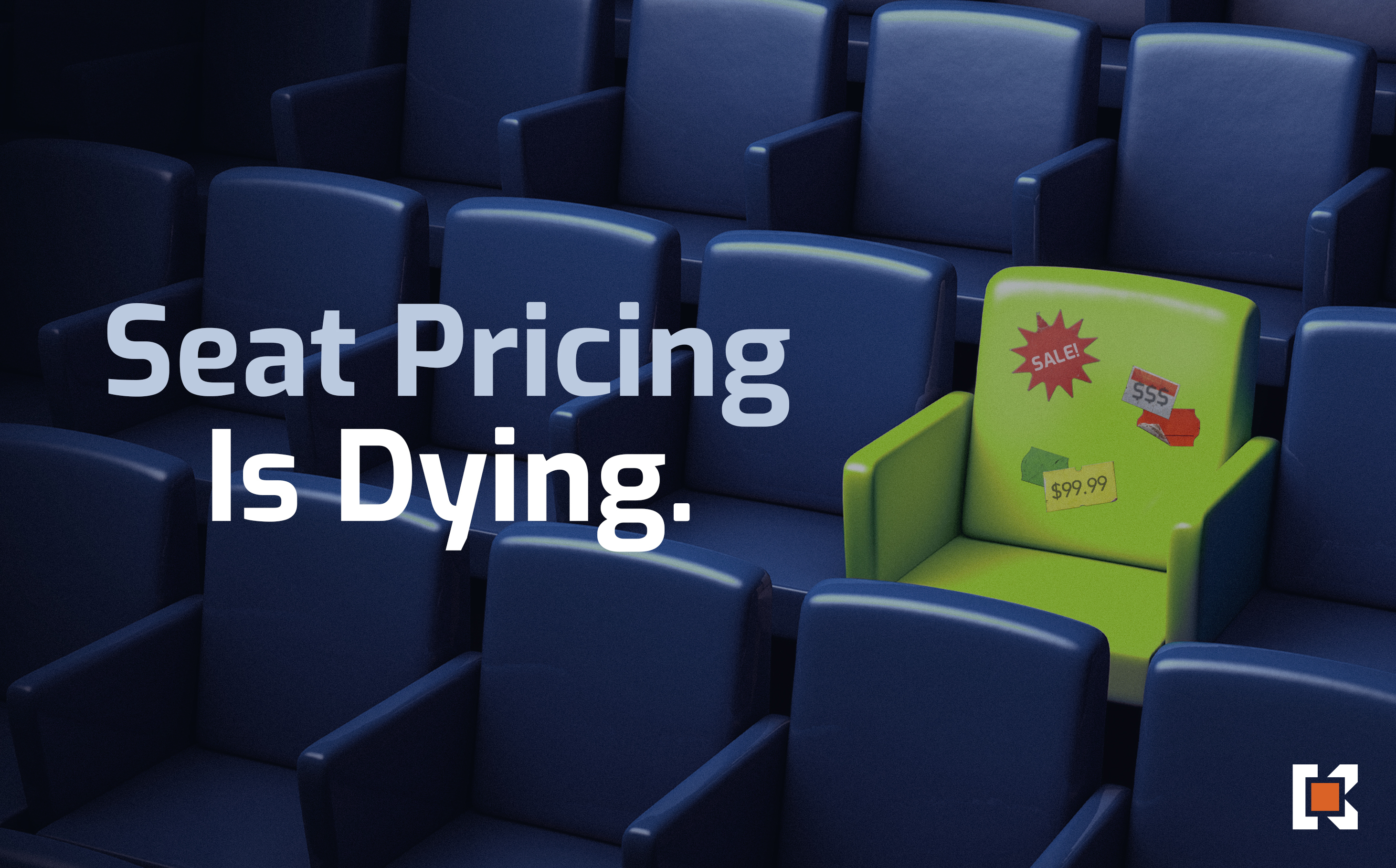
There's a large trend underway in SaaS right now. Seat pricing is dying, and consumption-based models are replacing it. This has been building for a while, but AI has accelerated it. Users are tired of paying for seats they're not using.
Think about what per-seat pricing actually asks you to do. You're constantly managing your license count. You add a seat, you remove a seat, somebody joins, somebody leaves, somebody needs to access the system for a week to run a report and now that's another seat you have to provision. It's essentially a tax on using your own software.
At Kodaris we took a different approach. There's a real cost to running a system: a tenant, storage, security, and overhead. So Kodaris charges a flat platform fee to cover that base cost. But beyond that, you get unlimited users, unlimited usage, and access to every module in your package. Even our base package includes 30+ modules. The full platform has 60+ modules. There is no per-seat math, and no budget anxiety when you need to onboard three new people or train someone on a new workflow.
Then, when AI or other consumption-based services are needed, you pay for what actually drives revenue and efficiency. If Kodaris incurs additional costs to run a specific operation, we charge per usage for those pieces. Everything else is included. That feels fair to us.
As part of that model, Kodaris also releases updates every 7 days to the overall platform, free of charge. Many of those updates are funded by customers in the Kodaris community who request features and improvements. The part that's a unique concept to some people in the industry is that customers don't mind contributing, because they know everyone else from the Kodaris community is contributing too. It's a great innovation flywheel. Users request features, the product gets better, and every customer on the platform benefits.
So Kodaris is a hybrid. A flat platform fee, consumption-based pricing where it makes sense, and continuous delivery of value back to customers through weekly updates that make the platform constantly better. That means your overall cost trends down over time, not up.
Another piece worth noting is that a lot of SaaS companies are using AI for every operation, which drives usage value back to the SaaS provider on every transaction. Kodaris takes a slightly different approach. In many products like document automation, we're actually having AI write the code. You incur that usage cost once or twice. And then from there on out, it becomes a reduced cost because the AI has already written a handler to manage whatever operation you're running. Not all operations qualify for this, but there are ways to reduce that usage cost significantly, and we work with customers to continuously do that.
You might ask where the revenue growth comes from if we're constantly trying to reduce costs for customers. Our answer is straightforward. We continuously try to grow the Kodaris customer base and community. Not tax current customers. Not squeeze more margin out of existing contracts. As that volume grows, the economics work. Delivering value to the customer drives company value.
We think a lot of SaaS companies will try to hang on to seat pricing or even seat plus usage limits for a while. People will push back, leverage open source, and reduce their cost. From what I've seen in industry analysis, under 25% of companies have moved to this kind of model so far. But I think it will be the model going forward for many.